
A Guide to Localized Digital Marketing on Instagram
Localized digital marketing is all about tailoring your message and campaigns to fit the specific culture, language, and vibe of a local audience. It goes way beyond just translating words; the goal is to create a real connection that feels completely natural to each market. This is absolutely critical for winning over audiences on platforms like Instagram, where personal and authentic content is king.
What Is Localized Digital Marketing And Why It Matters
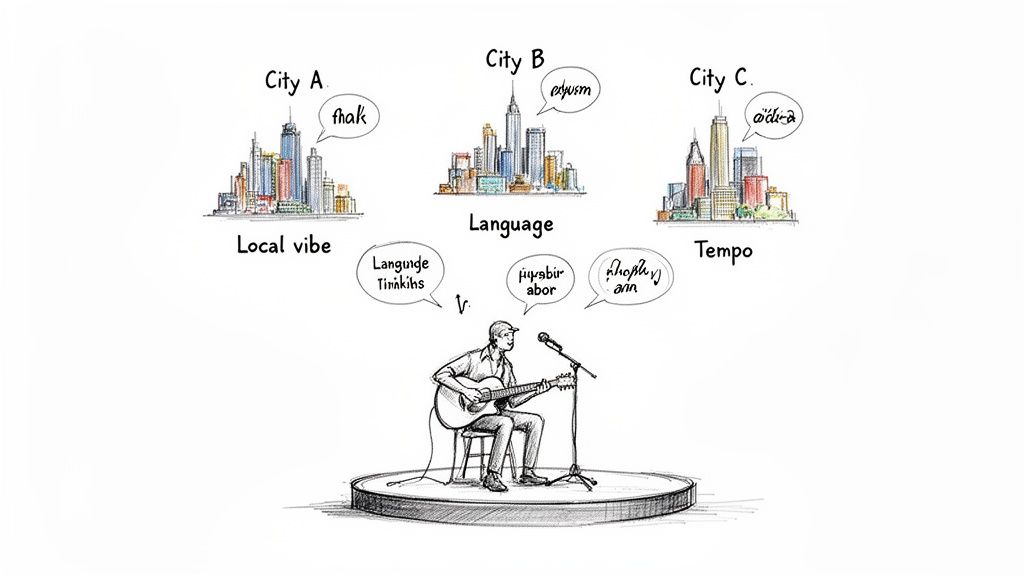
Think of a world-famous musician on a global tour. They could just show up and play their biggest hit exactly the same way in Tokyo, Rio de Janeiro, and Berlin. Sure, people would probably enjoy it, but it would feel like a broadcast—not a shared experience.
Now, what if that same musician learned a few phrases in Japanese for the Tokyo show? Or worked a bit of samba rhythm into the encore for the crowd in Rio? Or even brought a local Berlin artist on stage for a surprise duet? The song is still the same at its core, but the delivery is entirely different. It's personal, it's respectful, and it creates a bond that people won't forget.
That's the magic of localized digital marketing.
It's not just about changing the language; it's about changing the conversation to match the local energy. A generic, one-size-fits-all strategy is like that first musician—technically fine, but emotionally miles away. For any brand trying to build a genuine community, especially somewhere as personal as Instagram, that kind of disconnect can stop you in your tracks.
Moving Beyond Simple Translation
True localization means adapting every part of your marketing so it feels like it was born and raised right there. This gets into the tiny details that a direct translation would completely miss.
We're talking about things like:
Cultural References: Using humor, idioms, or images that actually land with the local culture.
Social Norms: Understanding things like consumer habits, family dynamics, and what people value.
Visual Aesthetics: Tweaking colors, choosing local models, and adjusting design styles to match what people are used to seeing.
Regional Relevancy: Tying your content to local holidays, city-wide events, or trending topics to show you're part of the conversation.
This deeper level of adaptation is what makes all the difference. Research actually shows that people feel psychologically closer to local brands than big global ones, which is a huge factor in building trust and influencing their decision to buy. If you want to dive deeper into building that local presence, check out our guide on Instagram marketing for small businesses
A successful localized campaign shouldn't feel like marketing at all. It should feel like a natural, helpful conversation with a brand that truly understands its customers and their world.
To really nail down the difference, let's quickly break down what a localized approach looks like compared to a more generic, global one.
Localization vs. Globalization: A Quick Comparison
| Aspect | Globalized Approach (One-Size-Fits-All) | Localized Approach (Tailored Experience) |
|---|---|---|
| Messaging | A single, standardized message is translated directly. | Core message is adapted with local slang, humor, and cultural references. |
| Visuals | Uses generic stock photos or a single set of brand images. | Features local models, landmarks, and culturally relevant imagery. |
| Campaigns | Runs the same promotions and sales events worldwide. | Creates campaigns around local holidays, festivals, and events. |
| Channels | Focuses on major global platforms like Facebook or Google. | Prioritizes regionally popular platforms (e.g., LINE in Japan, VK in Russia). |
At the end of the day, localized marketing isn't just another tactic to add to your list; it's a whole mindset. It's about looking at your audience and showing them that you see them, you respect their culture, and you're genuinely invested in being a part of their community.
The Power Of Instagram For Localized Campaigns
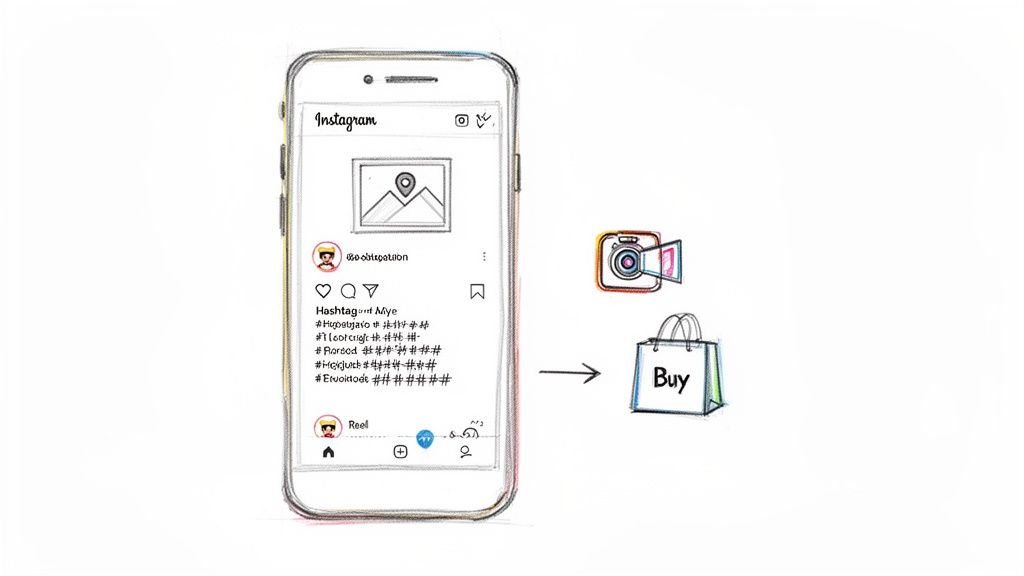
If localized marketing is all about speaking a community's language, then Instagram
Unlike platforms that rely heavily on text, Instagram lets you show instead of just tell. You can use images, Reels, and Stories to capture a city's unique vibe, feature local faces, and celebrate regional traditions. This visual storytelling is the heart of great localization. It helps you build a brand that feels less like a distant corporation and more like a neighbor.
A Platform Built For Local Connection
Instagram isn't just one giant global network; it's really a collection of millions of tiny, hyper-local communities. The platform's design naturally encourages location-based discovery, handing brands some seriously powerful tools to reach customers exactly where they are.
These built-in features are the bedrock of any solid localized strategy:
Location Tags: Adding a specific city, neighborhood, or even a single storefront to your posts and Stories makes your content pop up for anyone searching for that place.
Regional Hashtags: Forget generic tags. Using hashtags like
#LondonEatsor#TokyoFashionplugs you directly into active, local conversations.Geo-Targeted Ads: You can run laser-focused ad campaigns that reach users within a specific radius, making sure your ad spend is hitting the most relevant audience possible.
These tools transform Instagram from a simple photo-sharing app into a precision instrument for local engagement. They let you cut through the noise and talk directly to the people most likely to become your biggest fans.
The goal isn't just to be seen by people in a specific location, but to be seen as part of that location. Relevance is the key to building trust and driving action.
This targeted approach has a real impact on the bottom line. When you create content that resonates on a local level, you build the kind of trust that turns followers into buyers, giving your conversion rates a serious boost.
Driving Local Commerce And Brand Discovery
Instagram has grown up. It's no longer just a place to share brunch photos—it's a major hub for e-commerce and brand discovery. Its visual nature makes it incredibly effective for showing off products in a way that feels organic and genuinely appealing. When you mix this with a localized strategy, the results get even better.
In the world of localized digital marketing, Instagram's blend of global reach and local targeting is a game-changer. The platform has a mind-boggling 2 billion monthly active users, yet it allows businesses to tailor content to specific regions with incredible detail. A huge 29% of users report making purchases directly on the app, making it a non-negotiable channel for e-commerce.
And the numbers back it up. While typical Instagram ads see a 1-2% conversion rate, localized campaigns can push this to 3% or even higher. Localized Reels from influencers, for example, hit the highest engagement rates at 2.08%. You can dig into more of this data in Sprout Social's 2025 index.
The data tells a clear story: localized content, especially through engaging formats like Reels and authentic influencer partnerships, doesn't just get more likes—it drives real, measurable business growth.
Why Localized Reels And Collaborations Win
Video content, particularly short-form Reels, has taken over Instagram. These fast-paced, dynamic videos are perfect for capturing the energy of a local event, showcasing a product in a regional setting, or teaming up with a hometown creator.
Partnering with local influencers is one of the smartest localization tactics out there. These creators have already built trust with a specific community. When they endorse your brand, it feels like a genuine recommendation from a friend, not a stuffy ad. That authenticity leads to much higher engagement and loyalty down the road.
Key Strategies For Effective Instagram Localization
Alright, you get why Instagram is a goldmine for localization. Now, let's get down to the fun part: actually doing it. Moving from theory to practice requires a solid playbook. A winning localized strategy on Instagram isn't about throwing spaghetti at the wall and seeing what sticks; it's a deliberate process of deep research, smart adaptation, and laser-focused execution.
The goal is to make your brand feel like it belongs, like it's a local favorite, not some big corporation dropping in from out of town.
And this journey doesn't start with creating content. It starts with listening. You have to understand the community you want to join before you ever try to speak to them. Get this foundation right, and everything you do next will be built on real insight, not just guesswork.
Conduct Hyper-Local Audience Research
Before you even think about hitting "post" on a localized piece of content, you need to put on your digital anthropologist hat. General demographic data is just the starting point. To truly connect, you have to dig into the subtle cultural cues that make a local community tick on Instagram.
Start with the basics in your Instagram Insights. Look at your current followers from the region you're targeting. What's their age, gender, and when are they most active? This gives you a baseline, but the real magic happens when you start observing their behavior.
So what does this deeper research actually look like?
Analyze Follower Content: Take a look at the public profiles of your local followers. What are they sharing? Notice any local slang, inside jokes, or cultural references popping up in their captions and bios?
Monitor Local Hashtags: Forget broad tags like
#NewYork. Get granular. Follow hyper-local tags like#BrooklynEatsor#LowerEastSideArt. This is where you'll find what real people are talking about, right down to the neighborhood level.Social Listening: Use social listening tools to track mentions of your brand or industry in the local language. Pay close attention to the sentiment. Are people excited? Frustrated? Understanding their pain points and preferences is crucial.
This research phase is all about gathering your raw materials—the language, the visuals, the values—that will make your content feel like it was made just for them.
Master Language And Cultural Adaptation
Once you have a feel for the local conversation, you can start shaping your own voice to join in. This is where a lot of brands miss the mark. They think a simple translation is enough, but true localization goes so much deeper. It's about adapting your language, your visuals, and even your understanding of cultural norms.
Direct translation rarely works because it completely misses the nuances of humor, sarcasm, and regional sayings. A clever phrase in English might come across as clunky or, even worse, offensive in another language. This is why working with native speakers or local creators isn't just a good idea—it's essential. They'll help you capture the true vibe of the local dialect.
Pro Tip: Don't just translate words; translate feelings. This even applies to your color palettes. For example, while white often symbolizes purity in Western cultures, it can represent mourning in some East Asian cultures. Little details like researching color symbolism can make a massive difference.
Cultural adaptation also means rethinking your visuals. Feature local models, shoot against recognizable landmarks, and tailor your imagery to match local aesthetic trends. You want someone to be scrolling through their feed, see your post, and immediately feel like it was made for them and by them.
Implement Technical Targeting And Local SEO
You've got your culturally spot-on content ready to go. Now, you need to make sure it actually reaches the right people. Instagram gives you some incredibly powerful tools to execute your localized digital marketing strategy with precision. The trick is to blend your creative content with smart technical targeting.
First, give your profile a local SEO tune-up. It's simpler than it sounds. Add the city or neighborhood name right into your bio. If it fits your brand, you could even include it in your username. This small change helps you show up when people search for local businesses on the platform.
Next, it's time to put Instagram's targeting tools to work:
Geo-Targeted Ads: You can run ad campaigns that are only shown to users in a specific city, zip code, or even within a one-mile radius of your physical store. This is perfect for driving foot traffic to a local event or promoting an in-store special.
Location Tags: Get in the habit of adding a specific location tag to every single post and Story. This makes your content discoverable to anyone exploring that location on Instagram, creating a permanent digital footprint for your brand in that area.
Local Influencer Partnerships: Team up with micro-influencers who have a real, engaged following in your target city. Their endorsement is like a powerful recommendation from a trusted local friend. Planning these collaborations is much easier with a structured plan, and you can learn how to build one in our guide to creating an
Instagram content calendar
.
How Automation Supercharges Your Localization Efforts
Let's be honest: great localized marketing feels deeply personal. It's human. But trying to manually juggle personalized conversations across different time zones, languages, and cultures is a surefire way to burn out. This is where smart automation comes in, acting as the engine that lets you scale your thoughtful strategy without losing your mind.
Imagine having a skilled, local assistant in every single market you're targeting. This assistant works 24/7, instantly greeting new followers in their native language, answering common questions about shipping to their city, and making sure nobody ever feels ignored. That's exactly what automation tools do. They become your tireless, perfectly coordinated team that handles all the repetitive stuff, freeing you up to focus on creative strategy and building real relationships.
Efficiency Gains And Cost Reduction
The most immediate win from adding automation to your localization workflow is a massive boost in efficiency. Instead of dedicating hours each day to replying to similar DMs or scheduling posts for the perfect local time, you can set up systems to handle it all for you. This lifts a huge operational weight off your shoulders when managing a multi-region presence.
The impact here is huge. Localized marketing is all about timely, relevant interactions, and automation makes that possible at scale. In 2025, 47% of marketers already automate their social media—it's the second most common channel for automation right after email. The data backs it up: 80% of marketing automation users see an increase in leads, and 77% report higher conversions. On top of that, automated teams see a 14.5% productivity boost and a 12.2% reduction in marketing overhead.
This diagram breaks down the localization process into a simple, repeatable loop.
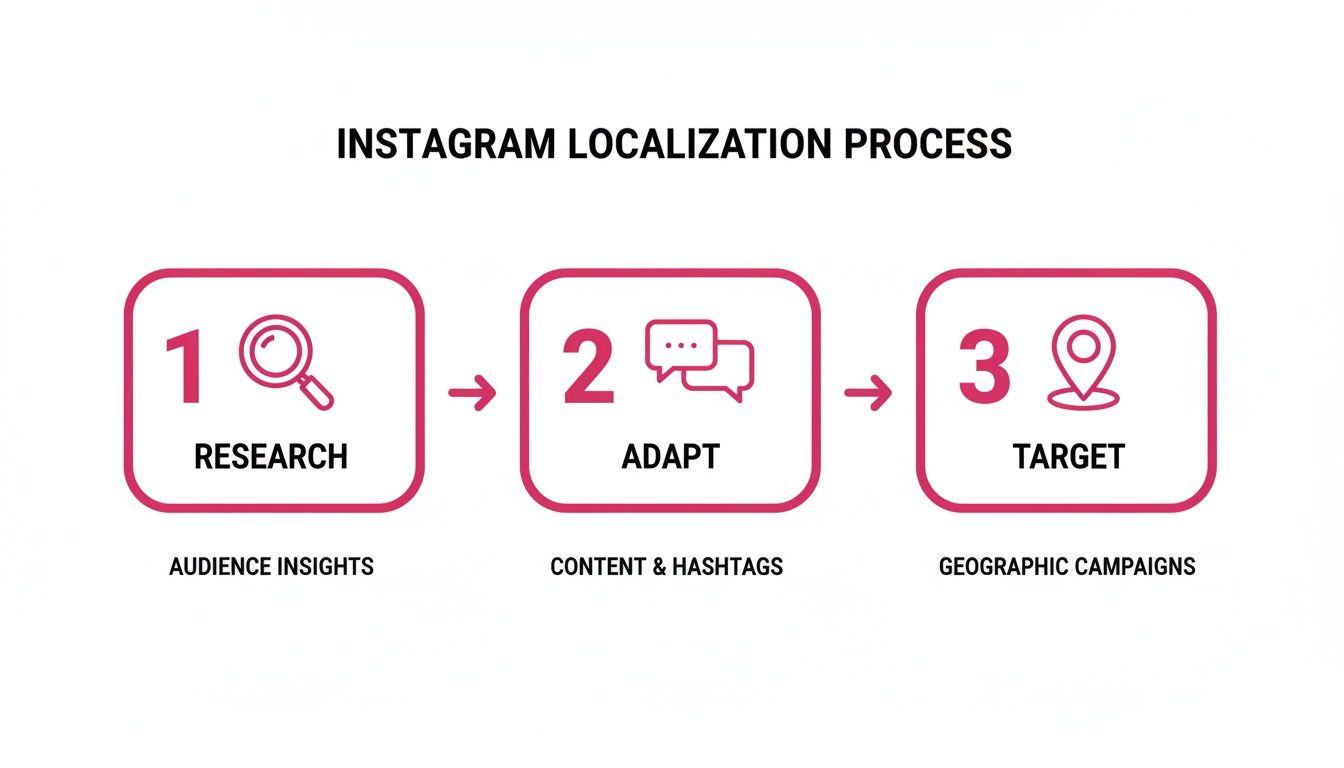
It's a good reminder that successful localization isn't a one-and-done task. It's a continuous cycle of research, adaptation, and targeting.
Scaling Personalized Engagement
But automation isn't just a time-saver. It's about creating better, more consistent experiences for your followers, wherever they are in the world. With the right tools, you can segment your audience by location and deliver highly relevant, automated interactions that still feel one-on-one.
Think about how you could use this:
Segmented Auto-Responders: You could set up automated DM flows that trigger based on a user's location. A follower from Brazil who comments on your post? They could instantly get an automated message in Portuguese with a link to your Brazilian product page.
Localized FAQ Bots: An automated chatbot can be programmed to answer common questions in multiple languages. This gives your international audience instant support without you having to be online. We have a whole guide on setting up an effective
chatbot for Instagram
if you want to dive deeper.Time Zone-Specific Scheduling: Automation lets you schedule your content to post at peak engagement times in each specific region. This guarantees maximum visibility without you having to wake up at 3 AM.
Automation handles the mechanics of engagement so you can perfect the message. It gives you the bandwidth to ensure every piece of content is culturally resonant and strategically sound.
For brands looking to take this even further, checking out the top AI video localization tools
By automating these key touchpoints, you ensure every follower gets a timely, relevant response, which builds incredible loyalty and trust across the globe. Your Instagram account stops being a chore and starts becoming a well-oiled machine for global growth.
Using AI And CRM To Personalize At Scale
Trying to manually localize your content for thousands of followers in different regions is a massive undertaking. It's just not practical. This is where Artificial Intelligence (AI) and Customer Relationship Management (CRM) systems become your secret weapons, turning raw follower data into personalized experiences you can deliver at scale.
Think of an AI-powered platform as a brilliant data analyst that never sleeps. It meticulously sifts through every interaction—comments, likes, Story replies, Reel views—to give you a much deeper understanding of your audience. You stop seeing just follower counts and start seeing behavioral patterns specific to each location.
This tech doesn't just collect data; it gives you insights you can actually use. It can pinpoint your biggest fans in London, predict which type of Reel will pop off in Sydney, or even flag local trends before they go mainstream. This is what modern localized digital marketing is all about.
Building Rich Follower Profiles With A CRM
This is where an Instagram-integrated CRM, like the one built into happydms, completely changes the game. A social CRM automatically syncs every single interaction a follower has with your brand into one clean, unified profile.
All of a sudden, a username isn't just a name anymore. It's a complete history of their engagement with you. You can see every DM they've sent, every product they've asked about, and which localized campaigns they've actually responded to. This transforms your audience from a faceless crowd into a collection of real people with their own local contexts.
With this level of knowledge, you can start segmenting your audience in powerful ways. You could create lists based on:
Geographic Location: Grouping followers by city, state, or country.
Language Preference: Identifying users who primarily engage in Spanish, French, or any other language.
Engagement Level: Separating your die-hard fans from casual viewers in a specific region.
Purchase Intent: Tagging users who have asked about pricing or shipping to their area.
This kind of detailed segmentation is the foundation for personalization that feels one-on-one but reaches hundreds or thousands of people at once. To truly make this work, integrating AI and CRM is essential. Just imagine combining AI-powered insights with powerful strategies like web scraping and CRM solutions to automatically keep your sales pipeline full of fresh leads.
Executing Hyper-Personalized Campaigns
Once you have these rich profiles and smart segments, you can launch campaigns that are incredibly relevant. Think about sending a mass DM that, instead of being a generic blast, is tailored to a specific city. You could offer a unique discount code just for your followers in Toronto or create an autoresponder sequence that references an upcoming local holiday in Mexico City.
AI-driven localization turns your marketing from a megaphone into a series of personal conversations. It's the art of speaking to the many as if you are speaking to the one.
This level of detail is what makes standout brands feel different from all the noise. And the data backs this up. By 2025, 56% of marketers are expected to be using AI tools that analyze demographics for tailored content. The impact is clear: 87% of CRM users feel confident in their strategies compared to just 52% of those without. These systems drive real results, boosting customer retention by 15-22% and increasing engagement by 17%.
Ultimately, AI and CRM are the engines that power sophisticated localized digital marketing. They handle all the complex data analysis and heavy lifting, freeing you up to focus on the creative strategy that builds genuine, lasting connections with your audience around the world. To learn more about how these tools build loyalty, check out our guide on choosing the right customer retention software
Measuring The Success Of Your Localized Campaigns
Launching a localized marketing strategy without tracking it is like throwing a party and not checking if anyone showed up. You might feel busy, but you have no real idea if your efforts are connecting, who you're reaching, or if you're getting any return on your investment. To really prove your strategy is working, you need to look beyond vanity metrics like total follower count and dig into the KPIs that show actual business impact.
This means finding data that answers the tough questions. Are your campaigns in Spain actually resonating with Spanish speakers? Is that geo-targeted ad for your Chicago pop-up driving more foot traffic than a generic national campaign? Getting these answers doesn't just justify the budget; it gives you the hard data you need to fine-tune your approach and do even better next time.
Key Metrics For Localization ROI
Tracking the right KPIs is everything. When you're running localized campaigns, your analytics absolutely must be segmented by region. Forget about looking at a single, blended report—you need to see exactly how each specific audience is responding to the content you created just for them.
Here are the core metrics that truly matter:
Location-Based Engagement Rate: This is your number one health check. It tells you the percentage of your followers in a specific city or country who are actually liking, commenting on, and sharing your localized content. A high engagement rate in Paris means your message is hitting the mark with your Parisian audience.
Conversion Rate from Geo-Targeted Ads: This is where the rubber meets the road. It directly measures your ROI by tracking how many people who saw a location-specific ad went on to buy something, sign up for your newsletter, or take whatever action you wanted them to.
Follower Growth by Location: Keep an eye on how your follower count is growing in the specific cities or countries you're targeting. A steady climb in a new market shows your localized content is successfully attracting the right people.
Localized Sentiment Analysis: Don't just count the comments—understand the feeling behind them. Are the comments in German overwhelmingly positive? That's a massive win and a strong sign that you've made a genuine cultural connection.
The real goal here is to draw a straight line from your localized efforts to tangible business results. If you can confidently report that your campaign in Germany led to a 20% increase in sales from German followers, you've got a success story that speaks for itself.
A Practical Framework For Tracking Success
Getting your metrics organized makes it so much easier to see the big picture and report back to your team or clients. A simple framework helps you understand not just what to track, but why it's important and where to find the data. This is where a tool like happydms
To make it even clearer, let's break it down in a table.
Essential KPIs for Localized Marketing Success
Track these key performance indicators to measure the true impact of your localized Instagram campaigns.
| Metric | What It Measures | How to Track It |
|---|---|---|
| Regional Follower Growth | The increase in followers from specific cities or countries. | Use Instagram Insights or third-party analytics to filter audience demographics by location. |
| Geo-Targeted Ad Clicks | The number of users who clicked on an ad shown to a specific geographic area. | Track this directly within your Instagram Ads Manager dashboard for each campaign. |
| Localized Content Reach | How many unique users in a target location saw your localized post or Reel. | Review the reach metrics for individual posts in Instagram Insights, filtering by location. |
| DM Response Rate by Language | The percentage of DMs in a specific language that you successfully responded to. | Monitor this in your happydms inbox, using tags to segment conversations by language or region. |
By consistently keeping tabs on these focused metrics, you turn your localized marketing from a creative guess into a predictable, data-driven engine for growth.
Got Questions? We've Got Answers
Diving into localized marketing can feel like a lot at first. It's totally normal to have questions pop up as you start tailoring your strategy for different communities on Instagram. Let's clear up some of the most common ones we hear from brands and creators.
As A Small Business, Where Do I Even Begin?
The best place to start is right where you are: with your current audience. Forget trying to conquer ten new cities at once. That's a recipe for burnout.
Instead, open up your Instagram Insights and see where your most engaged followers are hanging out. Pick just one or two of those top locations and pour your energy there. This approach lets you test the waters, figure out what that specific community loves, and build a solid playbook before you think about expanding.
Isn't Localization Just A Fancy Word For Translation?
This is a super common misconception, but it's a critical one to get right. Thinking of localization as just translation is like saying a recipe is just a list of ingredients. You're missing the most important part: the method.
Translation is the literal, word-for-word swap of text from one language to another. It's a technical task.
Localization, on the other hand, is about adapting the entire experience to feel native to a specific culture. It means swapping in visuals of local landmarks, tweaking your humor so it actually lands, and aligning your offers with local holidays or events. It's about making your brand feel like it truly belongs there.
How Can I Possibly Manage Campaigns In Multiple Places?
Juggling campaigns across different regions sounds like a nightmare, but it's all about combining smart strategy with the right tools. The key is not to do everything manually.
First, create a master content calendar that maps out your core message. Then, let automation do the heavy lifting. You can schedule posts to go live at the perfect time in each local time zone and set up automated DM responders in different languages.
Tools like happydms
Ready to stop guessing and start connecting? See how happydms can automate your localized engagement and turn followers from around the world into loyal customers. Start for free and see the difference.